What actually helps if you hate being on camera?
The moment a lens is in front of you, your whole personality changes. You go from a warm, natural person to stiff and rigid. Almost everyone I work with starts here, and I did too.
Jump to the short answer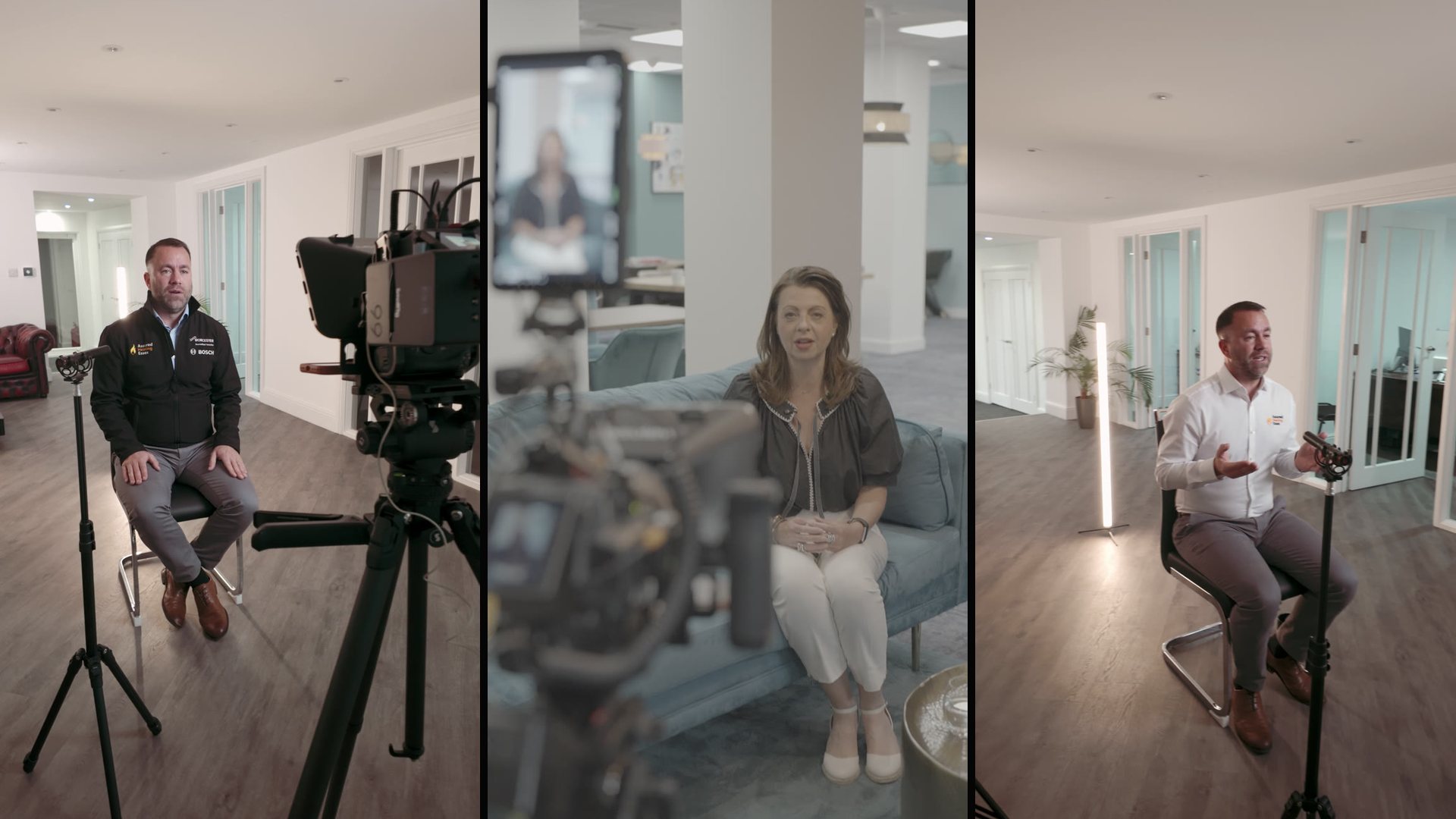

Three things genuinely help. Use a teleprompter, so your mind cannot go blank and you can focus on how you come across instead of what to say. Get your energy up before you start, because low energy reads instantly on camera. And vary your tonality, slowing some bits down and speeding others up, rather than reading in one flat tone. The fear does not vanish, but it stops getting in the way.
Why does being on camera feel so unnatural?
Because you think there is a way you are supposed to act. The camera turns a conversation into a performance, and performing is a different skill to talking.
The majority of business owners I speak to hate being on camera. I get it, because I was exactly the same. The moment a lens is pointed at you, you go from being a warm, natural person to being stiff and rigid, purely because there is a camera looking at you.
I had the same performance fear. My mind would go blank every time I looked down a lens. Take after take, and it still was not right.
But here is what I noticed. Not one person I have spoken to has ever said video is a waste of time. Everyone gets how well it can work for them. So the blocker is not strategic. It is psychological and practical, which means it is fixable.
Does a teleprompter actually help?
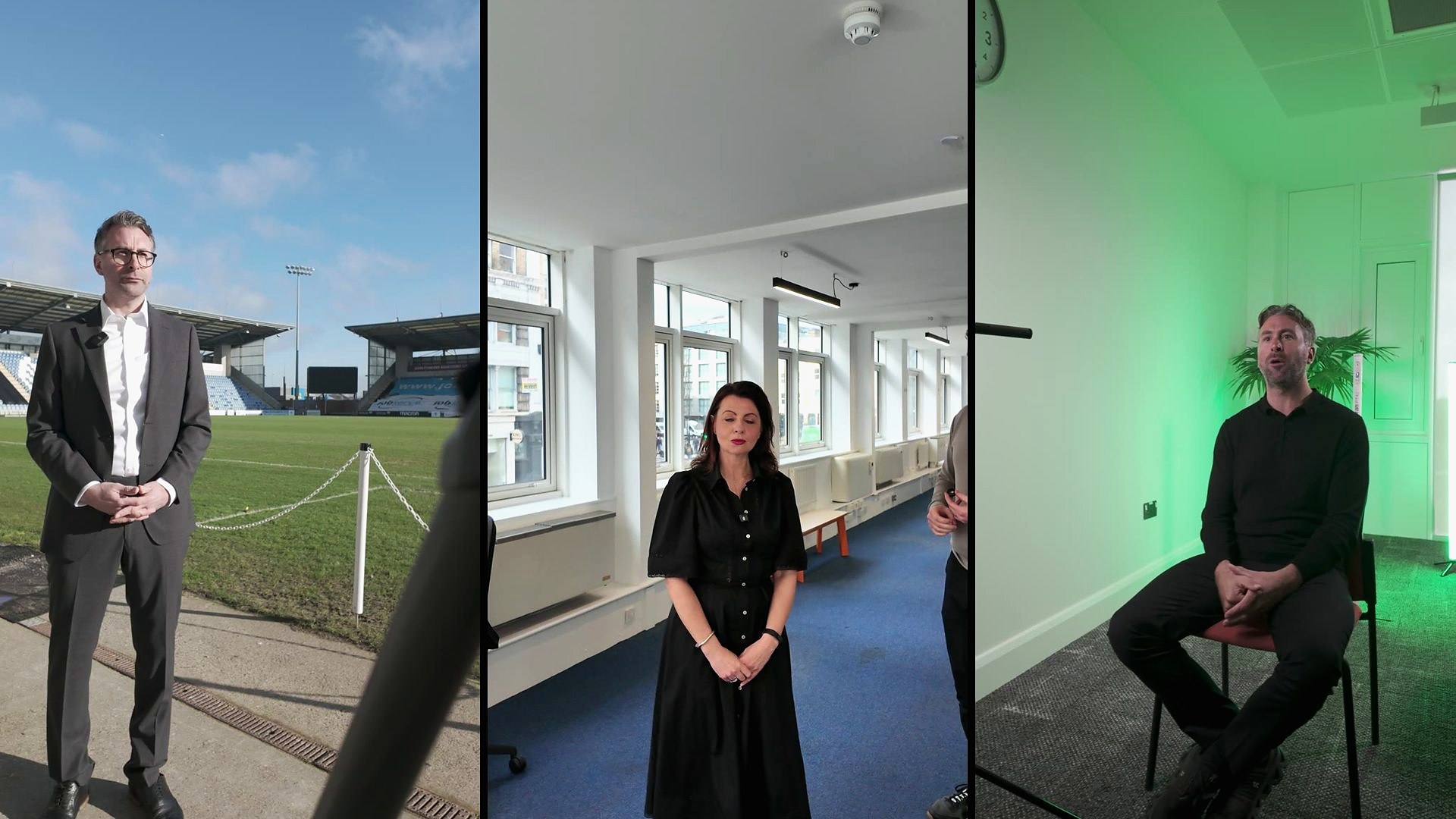
Yes, more than people expect. If your mind goes blank, a teleprompter removes that problem entirely. You stop worrying about what to say and start focusing on how you come across.
You do not have to use one every time. A mixture is good, and some of the best content is unscripted. But when someone is starting out and the blank mind is the thing stopping them, it takes the whole problem off the table.
What else makes a difference?
Two things. Your headspace before you start, and your tonality while you talk. Both are more controllable than people realise.
You can always tell when someone is low energy on camera. It reads immediately. So pick your spirits up a bit before you start, think about who you are actually talking to, and bring the energy you would bring to a normal conversation. That shifts everything.
Then there is tonality. A lot of people read a script in one flat tone, like they are reading a book aloud. If you slow certain bits down, speed others up, and vary the delivery, that is when you start to sound like yourself again.
If the camera is the only thing stopping you, book a free 20 minute call and I will talk you through how the sessions run.
Does the fear ever go away?
Not completely. But it gets easier every single time, and most people stop thinking about the camera entirely by the second or third session.
I went through this myself. I much preferred being behind the camera for years, and the only thing that fixed it was reps. Each time it got a bit easier.
The setup does not make you a natural. It just stops the camera getting in the way of someone who already knows what they are talking about.
Frequently asked questions
What helps if you hate being on camera?
A teleprompter so your mind cannot go blank, lifting your energy before you start, and varying your tonality rather than reading in one flat tone.
Should I use a teleprompter for social media video?
It helps a lot when you are starting out, because it removes the blank mind problem. A mixture of scripted and unscripted usually works best over time.
How long before being on camera feels normal?
For most people, by the second or third session they have stopped thinking about the camera entirely.
Do I need to be a natural on camera?
No. You need to show up. The scripts are written in advance, so you are not performing from memory.
I'm a dentist in Chelmsford. I know video would help bring patients in, but I freeze the second a camera is on me and my mind goes completely blank. I've cancelled two shoots already. Is there any way round this?
Freezing and going blank the moment a lens is on you is the most common thing I hear, and it is fixable. A teleprompter removes the blank mind entirely. The script is written in advance, so you're not trying to remember anything and you can put your attention into how you come across instead of what to say next. Get your energy up before you start, because low energy reads instantly, and vary your pace rather than reading flat. Most people stop thinking about the camera by the second or third session.
I run a plumbing and heating firm in Braintree. I'm fifty-two, I hate the sound of my own voice, and I'm convinced I'll look like an idiot. My competitors are all over Instagram. Do I actually have to be the one on camera?
Hating your own voice and being certain you'll look daft is normal, and it isn't a reason to write video off. Being on camera does help, because people buy from the person they'd actually be dealing with, but you don't have to wing it. Scripts are written in advance and read from a teleprompter, so you're never scrambling for words. The first session feels strange for everyone. Most clients stop thinking about the camera by the second or third one. The fear doesn't vanish, it just stops getting in the way.
I'm an aesthetics practitioner in Colchester. I've forced myself to record reels on my phone for six months, I still hate every second, and I watch them back and cringe. Should I just accept that video isn't for me?
Six months of forcing yourself to record reels and still cringing usually means you're doing it the hard way, not that video isn't for you. Winging it into your phone keeps the performance fear alive. With the script written in advance and read off a teleprompter, the hardest part disappears: you're not hunting for words, you're just talking. Get your energy up before you start and vary your pace instead of reading in one flat tone. Most people stop thinking about the camera by the second or third proper session.
Want a session where the scripts are already written and you just show up?
Book a free 20-min call
Keep reading
How much time does marketing actually take?
The most common thing I hear is "I just do not have the time". After ten years I think the problem was never time. It was that every single week you were starting from scratch.
5 min read
 0:44
0:44How to structure a reel: the simple framework I use
Most people get stuck creating content because they do not have a framework to deliver their ideas. Here is the simple structure I use for every single reel.
2 min read
 0:45
0:45One shoot day, a whole month of content
Most owners know they should be posting, but finding the time to film, edit and post regularly just never happens. Here is how one shoot day a month fixes that.
2 min read